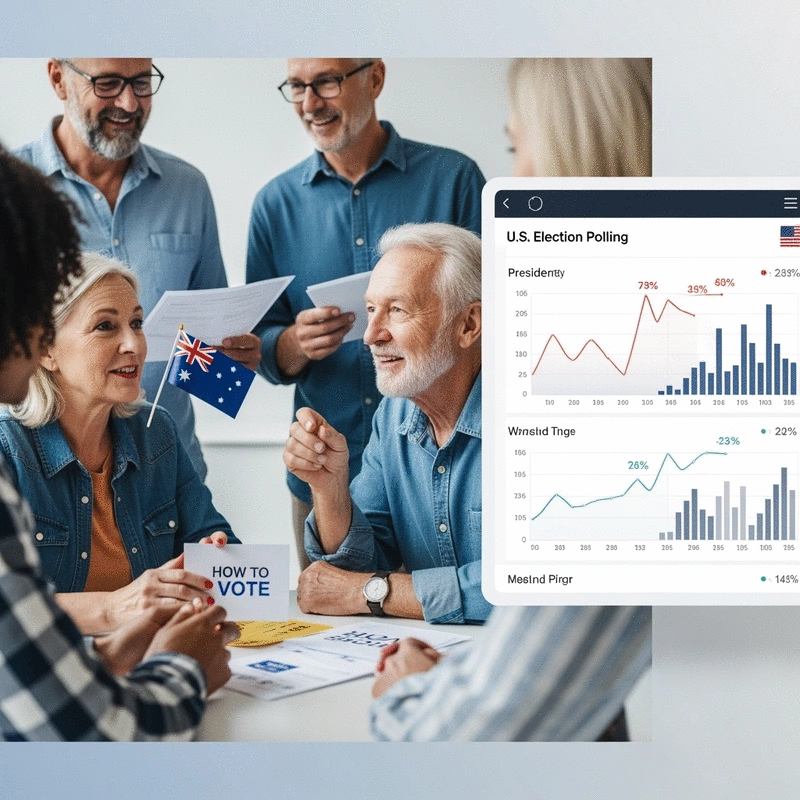
Polling Trends: Dynamic Voter Sentiment
Voter sentiment is more dynamic than ever, reflecting shifting priorities among Americans, leading to an unpredictable electoral landscape.
- Rise in independent voters.
- Fluctuating candidate support.
As we delve into the intricate dynamics of the upcoming US elections, it's essential to recognize how these events not only shape American politics but also reverberate across the globe, particularly in Australia. The interplay of voter sentiments and polling trends offers a fascinating glimpse into the future, encouraging us to stay informed and engaged.
The following visual summarizes critical polling trends and demographic shifts in US elections, highlighting their significance for Australia's diplomatic and economic future.
Voter sentiment is more dynamic than ever, reflecting shifting priorities among Americans, leading to an unpredictable electoral landscape.
Demographic shifts, especially among younger and minority voters, are significantly altering the political landscape.
US election outcomes will reshape Australian diplomacy, requiring proactive adaptation to altered alliances and new economic policies.
Media and social platforms critically shape public perception of US elections, both clarifying and complicating narratives.
As we gear up for the 2024–2028 US elections, it’s essential to grasp the timeline and significance of these pivotal events. The election cycle will kick off with primaries in 2024, leading to the general election in November. This period is crucial not just for Americans, but for us here in Australia, as the outcomes could ripple through our geopolitical landscape.
With the stakes higher than ever, understanding these elections provides us with insights into how US policies may affect our own political and economic environment. We at Democracy Today are committed to breaking down these complexities for our readers, ensuring you are well-informed.
The upcoming elections are not just about choosing a president; they represent a critical juncture in American history. Amidst the backdrop of social change, economic uncertainty, and international relations challenges, the political climate is charged with emotion and urgency. This is the time when candidates will lay out their visions for the future, and voters will decide which direction they want the country to take.
For Australians, staying abreast of these developments is vital. The US elections don’t just occur in a vacuum; they directly influence our political discourse and international relationships, as highlighted by polling data from institutions like the Lowy Institute.
Current polling trends reveal fascinating insights into voter sentiment in the US. Various surveys indicate fluctuating support for candidates, with issues like immigration, economic policies, and healthcare resonating strongly with the electorate. These trends offer us a glimpse into the heart of American politics as well as the factors driving voter decisions, including specific data points discussed in the USSC Briefing Room podcast on polling readouts.
As we analyze these trends, it becomes clear that understanding polling is not just about numbers; it reflects the evolving American identity and its implications for Australia.
Voter turnout and demographics play a crucial role in shaping electoral outcomes in the US. Historical data shows that turnout can vary widely depending on the election's context, often influenced by factors such as age, education, and socio-economic status.
For instance, younger voters have shown higher engagement in recent elections, often swayed by issues like climate change and social justice. This demographic shift has the potential to alter the political landscape significantly, as detailed in analyses of how Australians stand on their most important ally.
As we prepare for the upcoming elections, it’s essential to consider how these dynamics could influence not only the US but also our political environment here in Australia.
As you follow the unfolding US elections, consider subscribing to diverse news sources. This approach not only broadens your perspective but also helps you discern between varying narratives and biases presented in the media, enhancing your understanding of how these elections impact Australia.
A1: US election outcomes can significantly impact Australia's foreign policy and trade relations, often leading to shifts in alliances and economic policies. It’s crucial for Australia to adapt proactively to these changes.
A2: Key issues include economic recovery, healthcare reform, and climate change, all of which resonate strongly with the American electorate and drive voter decisions.
A3: The rise in independent voters indicates a shift away from traditional party loyalty, contributing to a more dynamic and unpredictable electoral landscape.
A4: Younger voters and minorities are increasingly pivotal in determining electoral outcomes, especially in key battleground states, and can significantly alter the political landscape.
A5: Media critically shapes public perception by framing candidates and issues, while social media platforms foster immediate reactions and discussions. Fact-checking initiatives are vital to combat misinformation and ensure accurate understanding.
As we wrap up our exploration of US election polling trends, it's important to highlight the key points that have significant implications for Australia. The current polling landscape reveals critical voter sentiments that not only shape the electoral outcomes in the United States but also directly impact our diplomatic and economic ties. Understanding these trends is vital for Australians who are keen to grasp how the upcoming elections may influence our relationship with the US.
To summarize, here are the key takeaways:
By keeping these points in mind, Australians can better prepare for the changes that US elections bring, particularly as we navigate our own political landscape in relation to international developments.
Looking forward, the outcomes of the US elections will undoubtedly reshape Australian diplomacy. As a seasoned political analyst, I’ve witnessed how electoral shifts can lead to substantial changes in foreign policy. It's crucial for Australia to adapt to these changes proactively, considering the potential for altered alliances and new economic policies.
Here are some strategies that might help Australia prepare for these evolving dynamics:
By adopting these strategies, we can ensure that Australia remains a proactive player on the international stage, equipped to respond to the new realities shaped by US elections.
Media plays a pivotal role in shaping public perception of US elections within Australia. As we consume news from various outlets, it's essential to recognize how coverage can influence our understanding of electoral processes. Traditional media, alongside the rapid rise of social media platforms, shapes narratives that can either clarify or complicate the realities of US politics.
Key factors include:
As we continue to navigate this landscape, it’s crucial for audiences to engage critically with media narratives and consider diverse viewpoints to form well-rounded opinions on US elections.
We’d love to hear your thoughts on how US election outcomes might impact Australia. Engaging in the conversation is vital as we collectively navigate these complex issues. Whether you have insights, questions, or opinions about the implications of the elections, your voice contributes to a richer dialogue.
Feel free to share your thoughts in the comments below or connect with us on social media. At Democracy Today, we’re committed to fostering informed discourse and would love to hear from our audience as we delve deeper into these critical topics!
Here is a quick recap of the important points discussed in the article:
As a seasoned political analyst and journalist, I bring a unique lens to the intricate dance between American and Australian politics. With a background in international relations, I've spent years immersed in electoral trends, offering insights into the US election cycle's complexities. My mission? To educate and engage politically curious Australians, bridging the gap between global events and local impact.