Economic Impact
Changes in US trade policies can significantly influence Australian exports and imports, affecting our national economy.
In a world where political decisions transcend borders, understanding the implications of US elections is crucial for Australian analysts. What insights can we extract from the intricate web of polling data and public sentiment? Let’s dive into the key takeaways.
The interconnectedness of US and Australian nations means that US electoral trends directly influence Australia's political and economic landscape. Below are the critical reasons why these elections profoundly affect Australia, across economic, security, and cultural dimensions.
Changes in US trade policies can significantly influence Australian exports and imports, affecting our national economy.
US foreign policy decisions directly shape Australia's national security strategy and regional stability.
American political discourse and trends often permeate Australian media and public discussions, affecting social narratives.
Understanding US electoral dynamics is crucial for Australian analysts to make educated predictions and inform public discourse.
As an Australian analyst, I often reflect on why the US elections hold such significance for us down under. The decisions made across the Pacific can have rippling effects on our political and economic landscape. From trade agreements to foreign policy decisions, the outcomes of these elections are crucial for our understanding of global dynamics.
The interconnectedness of our nations means that paying attention to US electoral trends isn't just an academic exercise; it's vital for staying informed and making educated predictions about future policies that could impact Australia.
The consequences of US elections go beyond borders, affecting various aspects of Australian life. Here are some critical reasons why we should care:
Understanding these elements helps Australian analysts grasp the broader implications of US electoral outcomes. It’s not just about politics; it’s about our future!
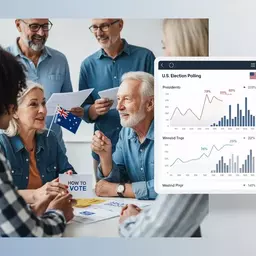
Polls serve as a window into the minds of the electorate. They provide a snapshot of public opinion, which can help us anticipate election outcomes. As analysts, we need to appreciate the nuances of polling data to draw meaningful insights.
For example, by examining polling trends, we can gauge candidate popularity and voter sentiment, allowing us to make informed analyses that align with our mission at Democracy Today. This understanding is crucial for fostering informed discourse among Australians.
Public opinion is a powerful force in shaping the outcome of elections. It can sway undecided voters and energize bases, making it a key factor in electoral strategies. Here are some ways public opinion influences outcomes:
As we assess these dynamics, it becomes evident that understanding public opinion through polls is essential for accurate electoral forecasting. By staying attuned to these trends, we can enhance our analyses and better inform our audiences in Australia.
To enhance your analysis of US election polls, consider utilizing advanced analytics tools that can help you identify subtle trends in voter sentiment. By layering demographic data over polling results, you can gain deeper insights into how different groups may influence electoral outcomes.
As we wrap up our discussion on the significance of US polls, it's essential to recognize the vital role that informed analysis plays in political decision-making. For us at Democracy Today, understanding how these polls reflect voter sentiment can guide not only political discourse but also help Australians navigate the potential impacts of US elections on our own political landscape.
Informed analysis equips analysts with the tools to interpret polling data critically. By understanding the nuances of these polls, we can better grasp their implications for Australian interests. Ultimately, this fosters a more engaged and knowledgeable electorate!
Informed analysis goes beyond just numbers; it’s about contextualizing data within broader political frameworks. Analysts need to consider various factors that influence polling outcomes, such as demographic shifts, current events, and cultural attitudes. This comprehensive understanding allows us to predict potential trends and outcomes more accurately.
At Democracy Today, we emphasize the importance of adapting our analyses as new information becomes available. This adaptability enables us to refine our perspectives continually, ensuring that our insights remain relevant and actionable.
To stay ahead in the rapidly changing political landscape, it’s crucial for Australian analysts to engage in ongoing education regarding US politics. This means not only consuming information but also actively participating in discussions and forums that expand our understanding of the implications of US electoral outcomes.
For instance, reports like those from the Brennan Center for Justice offer valuable insights into the concerns of election officials, highlighting issues that can influence voter confidence and election administration. Similarly, the U.S. Election Assistance Commission provides studies and reports that detail various aspects of election administration and voter behavior, which are essential for a comprehensive understanding.
Such engagement not only enhances our political savvy but also fosters a community of informed analysts who can effectively contribute to discussions on how US politics intertwine with Australian interests.
Election forecasting tools are invaluable for analysts looking to enhance their political analysis. These tools offer a wealth of data that can help us understand potential election outcomes before they occur. By leveraging advanced models and analytics, we can gain insights that may not be immediately apparent from polling data alone.
By integrating these tools into our analyses, we elevate the quality of our insights and contribute to a more informed public discourse. This combination of informed analysis and strategic tools positions us to better understand and respond to the complexities of US elections and their implications for Australia.
As we look ahead, it’s imperative for Australian analysts to remain engaged with continuous updates about US elections. Staying informed requires actively seeking out new information and learning opportunities. At Democracy Today, we're committed to providing our readers with the latest insights and analyses on polling trends and electoral dynamics.
One effective way to enhance our understanding is through case studies. By analyzing past elections and the associated polling data, we can uncover patterns that help inform our predictions for future events. This practice not only builds our analytical skills but also enriches our discussions!
To deepen our expertise in polling data and election analysis, here are some recommended resources:
Diving into historical polling data can reveal trends that are essential for making informed predictions. By examining how past elections unfolded alongside polling data, we can identify indicators that suggest how future elections may play out. This historical perspective is invaluable for analysts aiming to craft well-founded insights.
As we continue to navigate the complexities of US elections, let’s ensure that we remain vigilant, informed, and ready to engage in meaningful analysis. Together, we can foster a deeper understanding of how these political dynamics affect our lives in Australia!
US election outcomes significantly influence Australia's economy, security strategies, and cultural landscape due to the interconnectedness of the two nations. Changes in US trade policies and foreign policy directly impact Australia.
Polls provide valuable insights into public opinion, candidate popularity, and voter sentiment. They help analysts anticipate election outcomes, understand voter motivations, and make informed predictions about future policies.
Public opinion is a powerful force that influences voter turnout, shapes candidate messaging, and can dramatically shift after events like debates. Understanding these dynamics through polls is crucial for accurate electoral forecasting.
Analysts can enhance their capabilities through ongoing education and active engagement in US politics, such as participating in webinars, joining discussion groups, and following reputable news sources and analysts. Utilizing resources from organizations like the U.S. Election Assistance Commission and the Brennan Center for Justice can also deepen understanding.
Election forecasting tools use advanced models and analytics to predict potential election outcomes by examining historical data, demographic trends, and polling data. They help analysts gain deeper insights beyond what raw polling data might immediately reveal, improving the quality of political analysis.
Here is a quick recap of the important points discussed in the article:
As a seasoned political analyst and journalist, I bring a unique lens to the intricate dance between American and Australian politics. With a background in international relations, I've spent years immersed in electoral trends, offering insights into the US election cycle's complexities. My mission? To educate and engage politically curious Australians, bridging the gap between global events and local impact.