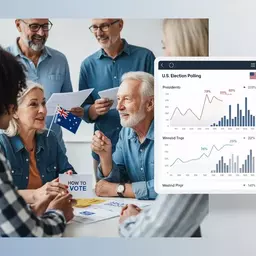
Polling methodologies not only shape electoral outcomes but also reflect the unique political landscapes of different countries. As Australians seek to understand U.S. electoral dynamics, several key lessons emerge from the comparative analysis of polling methods used in both nations.
What You Will Learn
The significance of diverse polling methodologies in accurately capturing voter sentiment, as illustrated by U.S. firms like Pew Research Center and Gallup.
How Multilevel Regression and Poststratification (MRP) modeling provides nuanced insights into voter behavior across demographics.
The role of Australian polling firms, such as Newspoll and YouGov, in shaping public understanding of electoral dynamics.
The impact of polling results on media narratives and public perception during election cycles, particularly through Newspoll's findings in Australia.
Polling Methodologies: US vs. Australia Comparison
A side-by-side comparison of key polling firm methodologies and their focus areas in the US and Australia, highlighting their unique approaches to understanding public sentiment.
US Polling Methodologies
•
Pew Research Center: Diverse surveys & focus groups, representative sampling.
•
Gallup: Tracking polls for sentiment over time.
•
Quinnipiac University: Targeted sampling in battleground states.
•
MRP Modeling: Combines polling & demographic data for nuanced insights.
Australian Polling Methodologies
•
Newspoll: Regular insights into voting intentions & party popularity.
•
YouGov Australia: Online polling, adapting U.S. data-driven models.
•
Lowy Institute: Focuses on Australian foreign policy attitudes and public opinion.
•
ANU Poll: Academic analysis of voter behavior and public sentiment.
Understanding Polling Methodologies: US vs. Australia
In the political landscape, polling methodologies serve as crucial tools for gauging public sentiment. Understanding these methodologies is key, especially for Australians looking to grasp how U.S. electoral dynamics play out. Let’s delve into the nuances of polling techniques used in the U.S. and contrast them with those in Australia.
As we analyze these methods, it’s important to note that both nations have unique approaches shaped by their political contexts. This section aims to unpack those differences and their implications for Australians interested in U.S. politics.
Defining Polling Methodologies for US Audiences
Polling in the U.S. often employs a variety of sophisticated methodologies, each designed to capture the complexities of voter sentiment. Notably, organizations like Pew Research Center, Gallup, and Quinnipiac University stand out for their rigorous techniques.
Pew Research Center: Renowned for its diverse methodologies, including surveys and focus groups, Pew emphasizes a representative sample, providing valuable insights into public opinion.
Gallup: Known for its tracking polls that measure public opinion over time, giving insight into changing dynamics.
Quinnipiac University: This firm utilizes targeted sampling to focus on key battleground states, offering critical insights into localized voter behavior.
These firms employ various techniques, such as telephone surveys and online panels, to ensure they accurately capture the ethos of American voters.
Overview of Key US Polling Firms and Their Techniques
Let's take a closer look at some key U.S. polling firms and their respective techniques. Each of these organizations has carved out a niche, contributing to the broader understanding of public opinion:
Rasmussen Reports: Focuses on daily tracking polls, often providing immediate feedback on voter sentiment.
YouGov: Utilizes online panels to gather a wide array of opinions, often employing a blend of traditional methodologies and digital tools.
Emerson College: Known for its interactive polling methods, which engage voters through various media.
By analyzing the methodologies of these firms, Australians can better appreciate the diverse frameworks that shape U.S. polling results. For a broader overview of top U.S. pollsters and their accuracy, FiveThirtyEight provides a comprehensive analysis of various polling organizations.
How MRP Modeling is Used in US Polling
One particularly interesting method gaining traction in the U.S. is Multilevel Regression and Poststratification (MRP). This technique allows pollsters to draw more nuanced inferences about public opinion across different demographics.
MRP modeling combines traditional polling data with demographic information to create a predictive model. This method is invaluable in understanding trends within subgroups, making it particularly useful in polarized environments. For Australians, grasping this method can provide insights into how U.S. polling might predict electoral outcomes.
The Role of Australian Polling Firms and Their Methods
In Australia, polling firms like Newspoll, YouGov, and Lowy Institute have established their own methodologies that reflect the unique political landscape.
Newspoll: A staple in Australian politics, offering regular insights into voting intentions and party popularity.
YouGov Australia: Adapts its techniques from its U.S. counterpart, focusing heavily on online polling.
Lowy Institute: Often dives deeper into Australian foreign policy attitudes, providing context that enriches public discourse.
These firms play a vital role in shaping public understanding of electoral dynamics in Australia, especially as they relate to U.S. policies.
Comparative Insights into YouGov and Lowy Institute
YouGov Australia and the Lowy Institute provide intriguing insights into Australian voter sentiment. YouGov employs data-driven models similar to its U.S. parent firm, while Lowy Institute focuses on public opinion concerning foreign policy.
This dual perspective allows Australians to understand not just local political trends, but also the implications of international developments, including those from the U.S.
Importance of Newspoll in Australian Elections
Newspoll has long been a vital player in Australian elections. It not only measures voter preferences but also tracks the impact of political events in real time. By following Newspoll's results, Australians can gain insights into how domestic issues reflect broader electoral trends.
Most importantly, Newspoll’s findings often shape media narratives and public perceptions during election cycles, making it a powerful force in Australian politics.
Exploring the Impact of the Australian National University (ANU) Poll
The ANU Poll is another key resource, especially for those interested in the academic analysis of voter behavior. It provides robust data on public sentiment regarding various issues, often informing academic research and policy discussions.
Understanding the ANU Poll can help Australians connect the dots between local voter preferences and global political trends, especially as they relate to U.S. politics.
Pro Tip
To enhance your understanding of polling methodologies, consider diving into the world of data visualization. Tools like Tableau or Google Data Studio can help you create compelling visual representations of polling data, making it easier to spot trends and insights that might be missed in raw numbers. This not only aids in your comprehension but can also be a powerful way to communicate findings to others!
Frequently Asked Questions (FAQs)
While both nations use diverse survey techniques, US polling often features targeted sampling for battleground states and advanced methods like MRP modeling. Australian polling, exemplified by Newspoll and YouGov Australia, focuses on regular insights into voting intentions and adapting online polling to local contexts.
Multilevel Regression and Poststratification (MRP) modeling combines traditional polling data with demographic information to create a predictive model. It's used in US polling to infer nuanced public opinion across different subgroups, particularly useful in understanding trends within polarized environments.
Newspoll is a vital player in Australian elections because it regularly measures voter preferences and tracks the impact of political events in real time. Its findings often shape media narratives and public perceptions, making it a significant influence during election cycles.
Australians can gain a better understanding by analyzing the methodologies of key US polling firms like Pew Research Center, Gallup, and Quinnipiac University, and by understanding advanced techniques such as MRP modeling. This comparative analysis provides insights into how different approaches capture voter sentiment.
To stay updated, you can subscribe to newsletters from reputable polling organizations, follow political analysts and polling experts on social media, and engage with platforms that analyze polling data and trends. Exploring data from organizations like Ipsos can also provide valuable insights.
Summarizing Insights on Polling Methodologies
As we wrap up our exploration of polling methodologies, it's clear that the comparison between US and Australian techniques offers valuable insights. Understanding how these methodologies differ not only enriches our perspective on electoral dynamics but also equips Australians with the tools to engage more effectively in political discourse. After all, informed choices lead to empowered citizens, and that's what Democracy Today strives to foster!
Final Thoughts on the Relevance of US Polling Techniques in Australia
US polling techniques can serve as a significant reference point for Australian analysts and political players. By examining methodologies employed in the US, we can appreciate the intricacies of voter behavior and public sentiment. This understanding can significantly shape how Australian businesses and politicians approach their own polling strategies.
Emphasizing the importance of accurate data collection methods
Recognizing the value of diverse sampling techniques
Adapting successful strategies from the US to the Australian context
As we delve into the unique landscape of Australian elections, let's remember that adopting best practices from US polling can enhance our understanding of electoral outcomes and voter engagement.
Encouraging Informed Choices in Polling Practices
To make informed decisions about polling practices, it's crucial that Australians engage with the nuances of both US and local methodologies. Familiarizing oneself with various polling techniques not only enhances our understanding of political trends but also allows for meaningful discussions around electoral reforms and best practices.
With resources and platforms like Democracy Today, Australians can stay updated on the latest polling trends while learning how these methodologies can be applied within our own political climate.
Call to Action: Engaging with Polling Methodologies
Now that we've highlighted the importance of US polling techniques, let's take the next steps together! Engaging with these methodologies can empower both businesses and politicians to make informed decisions that resonate with their audiences. Here are some practical ways to get involved:
Participate in webinars and workshops focusing on polling methodologies.
Connect with local polling firms to understand their approaches.
Share insights and findings with peers and stakeholders to foster informed discussions.
By taking these actions, we can all contribute to a more informed and engaged electorate.
Resources for Further Exploration and Learning
For those eager to deepen their understanding of polling methodologies, there are numerous resources available. Here are a few recommended avenues:
Books and articles on electoral psychology and polling techniques
Online courses on data analysis and interpretation of polling data
Research papers from leading political analysts and polling organizations
These resources can provide a deeper dive into the factors that influence polling accuracy and interpretation, which is essential for anyone interested in the political landscape!
How to Stay Updated on Polling Trends and Insights
Staying informed about polling trends is crucial for understanding the political landscape. To keep your finger on the pulse, consider:
Subscribing to newsletters from reputable polling organizations
Following political analysts and polling experts on social media
Engaging with platforms that analyze polling data and trends
This knowledge not only enhances your political awareness but also enriches discussions with peers and constituents alike!
Exploring Data from Ipsos and Other Leading Polling Organizations
Finally, embracing insights from organizations like Ipsos is invaluable. Their research often offers a snapshot of public opinion across various sectors, allowing for a greater understanding of voter sentiment. By analyzing these data sources, we can better navigate the complexities of the electoral landscape.
So, let’s remain curious and vigilant, continually seeking to learn and engage with the evolving world of polling methodologies. Together, we can enhance our understanding of politics both in the US and Australia!
Recap of Key Points
Here is a quick recap of the important points discussed in the article:
Understanding the unique polling methodologies in the U.S. and Australia enhances insights into electoral dynamics.
Key U.S. polling firms like Pew Research Center, Gallup, and Quinnipiac University employ diverse techniques to gauge voter sentiment.
MRP modeling allows for nuanced analysis of public opinion across demographics, providing valuable insights for understanding voter behavior.
Australian firms such as Newspoll and YouGov have developed methodologies that reflect local political contexts and voter preferences.
Engaging with polling methodologies from both countries can empower Australians to make informed political decisions and facilitate meaningful discourse.
Clara Whitfield
As a seasoned political analyst and journalist, I bring a unique lens to the intricate dance between American and Australian politics. With a background in international relations, I've spent years immersed in electoral trends, offering insights into the US election cycle's complexities. My mission? To educate and engage politically curious Australians, bridging the gap between global events and local impact.
Democracy Today is your dedicated Australian portal, meticulously tracking every phase of the US election cycle. We empower politically curious Australians, journalists, and students with balanced reporting and expert commentary on US electoral dynamics and their link to Australia’s political and economic landscape.
What do the latest US polling trends really tell us? Numbers can be deceiving, but they offer crucial glimpses into voter sentiment. Stay informed!
The Electoral College: complex, yes, but vital to understanding US election outcomes. Dive into our explainers to demystify its impact!
From trade to foreign policy, US elections ripple across the globe. Discover how their choices could impact Australia's economy and alliances.
Swing states are where elections are won and lost. We track voter demographics and campaign strategies in these battlegrounds. Don't miss a beat!
Beyond the headlines: our expert analysis breaks down complex political narratives into digestible insights for the curious Australian.
Understanding campaign finance is key. Who's funding whom, and what does it mean for policy? We connect the dots.
Media coverage shapes perception. Learn how different outlets frame the US election and what biases to watch for.
Candidate debates are pivotal moments. We provide timely recaps and analysis, highlighting key policy shifts and gaffes.
The role of technology in modern elections is growing. From social media campaigns to data analytics, we explore its influence.
Judicial appointments are a lasting legacy of any presidency. Understand the stakes and implications for US and global law.
From primaries to inauguration, each stage of the US election has its own unique dynamics. We guide you through every step.
International alliances are constantly shifting. Explore how US election outcomes could reshape global partnerships, including Australia's.
Don't just watch the news, understand it. Our in-depth articles offer context and clarity on the most pressing political issues.
Stay ahead of the curve with our expert predictions and scenario analyses. What if? We explore the possibilities.
From our founder, Clara Whitfield: "My aim is to empower Australians with the knowledge to navigate the complexities of international politics." Discover more insights today!